

White Feathers, Crimson Leaves – Talking with the Cover Artist
An interview with illustrator Diego Gisbert Llorens
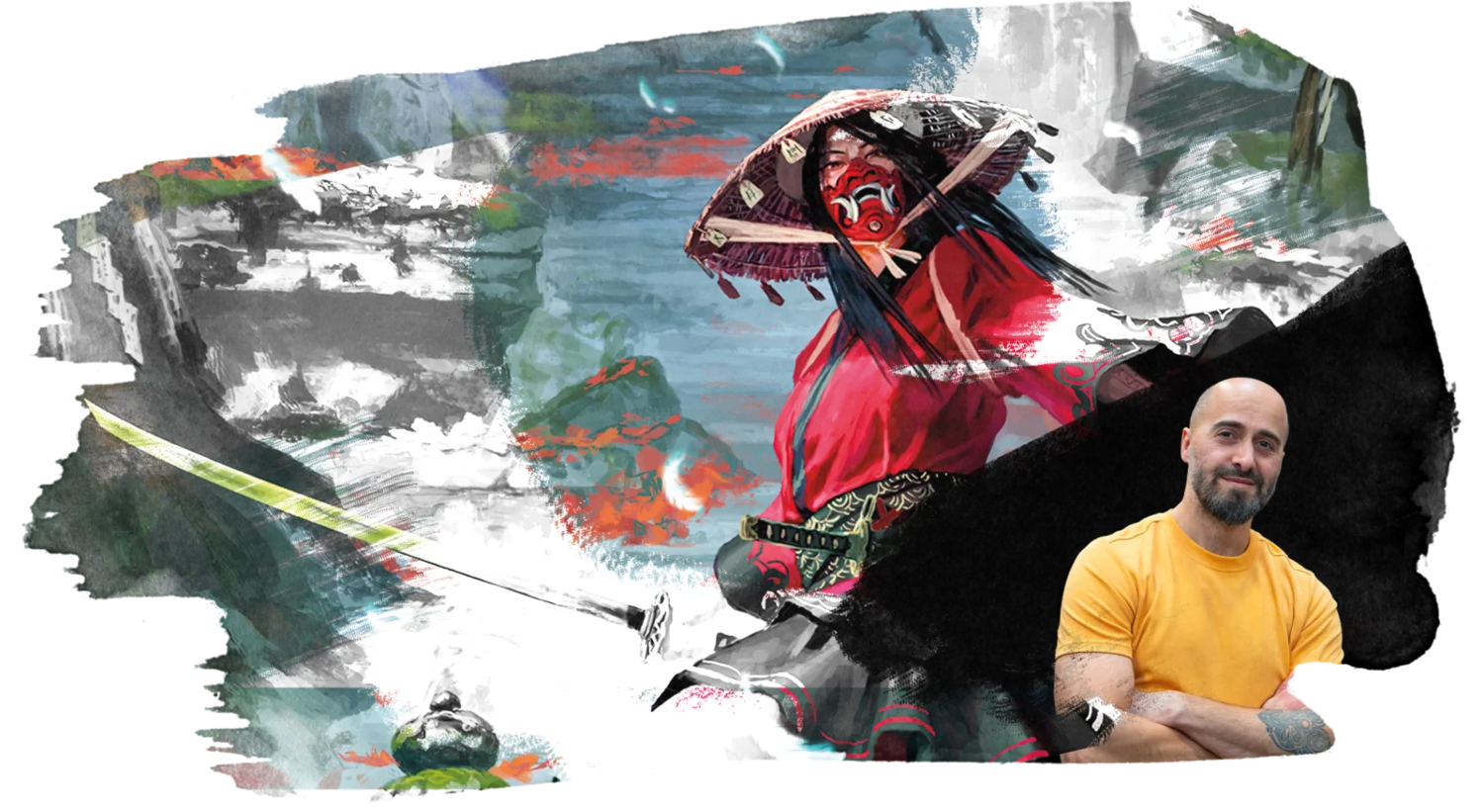
Creating a book cover is an art in itself. In any given project, an illustrator makes dozens of decisions while translating words to image and evoking a feeling in the viewer. The eerie cover illustration for White Feathers, Crimson Leaves features the resolute wardmaster Yogo Shuko with her jade katana standing before a fallen shrine as a ghostly figure emerges from the background.
To celebrate the recent release of the folk horror novel by Josh Reynolds, we caught up with the cover artist to find out a little more about the cover and the work behind the scenes. Below you can find the interview with Diego Gisbert Llorens, an illustrator, concept artist and fine artist with a traditional art background, who’s been working in the entertainment industry since 2007, both in-house and as a freelancer.
The cover features a striking image of a samurai, as well as a lot of supernatural elements. How did you go about striking the balance between these elements?
When the brief includes one or more elements that must be featured in a specific way, I make sure to orchestrate the palette around them. In this case, the red of the kimono was an essential part of the character that should stand out within the composition, so I made sure the rest of the image had plenty of muted, complementary tones to ground the strong reds without competing with them.
The background features a ruined shrine in the forest. How did you come up with this part of the composition?
Abandoned and overgrown places of worship always evoke a feeling of the supernatural, of the interaction of the physical and the spiritual world taking a darker turn. Perfect fit for a ghost story.
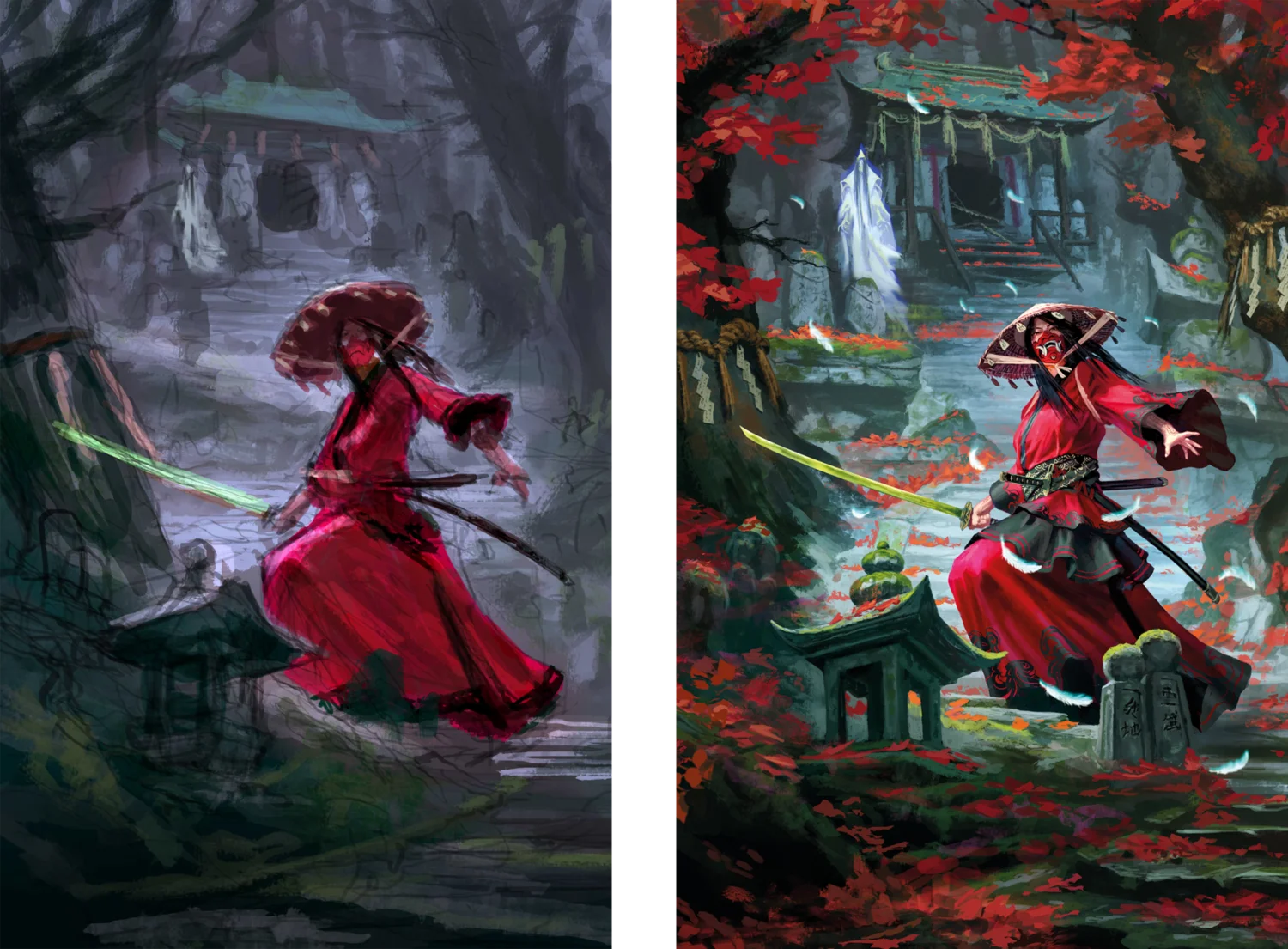
Can you tell us a little about how the piece developed between your initial sketch and the final cover?
An illustration is a living thing, and it grows from the seeds sown during the sketching process. I like being as vague during the sketching process as I can afford, while setting up the main elements clearly enough for the art director to see. The rest develops as the image moves forward and smaller problems need to be solved. As it often happens, a problem can be an opportunity, and I always try to use secondary elements to add layers of meaning to the story and, visually speaking, to reinforce the main elements of the composition.
You have a long history of illustrating Legend of the Five Rings. What about the setting and world inspires you?
Rokugan has one of the most complex and deep lores of any fantasy universe I know, probably because it is strongly based on the already rich Japanese feudal period and traditional mythology. It is just as alive and vibrant, and it keeps moving forward, unlike many other settings. When I sit down to do research for a piece based on L5R, I feel as if I am studying actual history.
Do you have any favorites among the Legend of the Five Rings pieces you’ve produced to date?
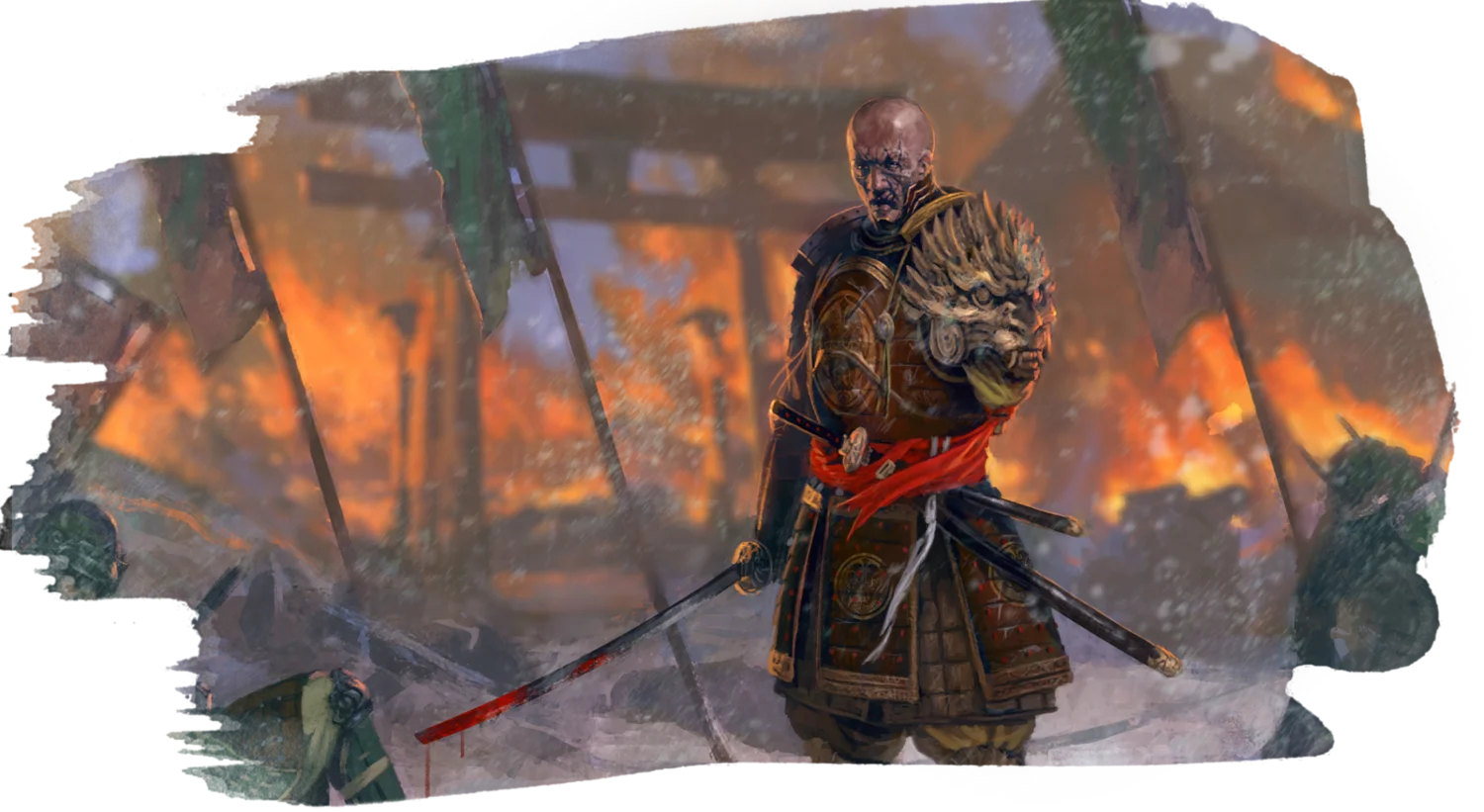
Well, as a matter of fact, I do! More for sentimental value than for anything else, really. In the game there is a Lion Clan samurai named Ikoma Ayumu. Not many people know that it originally was my own character from the L5R roleplaying game. When AEG asked me to paint whatever I wanted for my initial art test, I chose to depict my own personal character, who was later added to the game itself with a different name and backstory. This was the second illustration I made of that character, and I tried to show his disillusion and regret for the glorification of war and armed conflict, something that sets him apart from many Lion samurai warriors.
If you’d like to read the story behind the cover, don’t forget to pick up White Feathers, Crimson Leaves by Josh Reynolds, a new folk horror adventure published by Aconyte Books. The novel is available as both paperback and ebook with audiobook format coming soon. You can order a copy by finding a retailer near you.